4G Internet Setup Troubleshooting
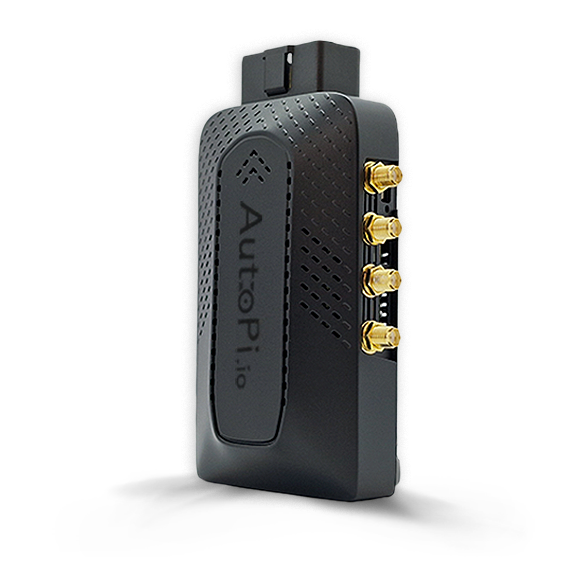
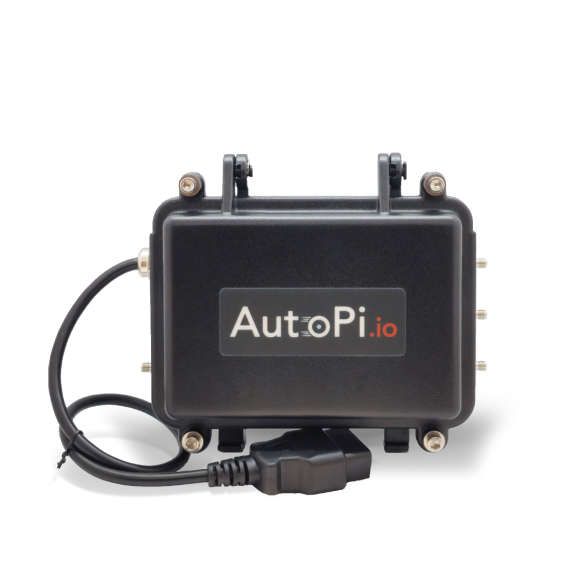
This guide will help you diagnose and resolve common 4G connectivity issues with your AutoPi CAN-FD Pro device. It provides systematic troubleshooting for problems including SIM card detection, modem configuration, APN settings, network interface status, and cloud connectivity. The guide is organized as a diagnostic checklist to help you identify and fix cellular connectivity problems step by step.
If you need assistance, contact support@autopi.io.
Prerequisites
Before starting, complete the initial setup guide.
Check SIM Card
-
Confirm that your SIM card is enabled for mobile datta. Test the SIM in another device (for example, a smartphone) and verify that internet access works.
-
If you are using a data-only SIM, confirm with your carrier that the data plan is active and roaming is enabled when required.
-
Verify that the SIM card is not PIN-locked. If it is PIN-locked, enter the correct PIN in the device settings.
-
Remove and reinsert the SIM card, and inspect both the SIM and slot for physical damage. Bent contacts, debris, or a loose SIM slot can prevent modem detection.
-
Make sure the SIM orientation is correct. The text side of the SIM card must face up, and the triangle end must point into the device.
cautionWhen inserted correctly, you should hear a small click as the card locks into position. Do not force the SIM card out after the click, as this can damage the slot. Always verify orientation before insertion.
Check Modem Detection (Hardware)
-
Connect to the device hotspot and open AutoPi Local.
-
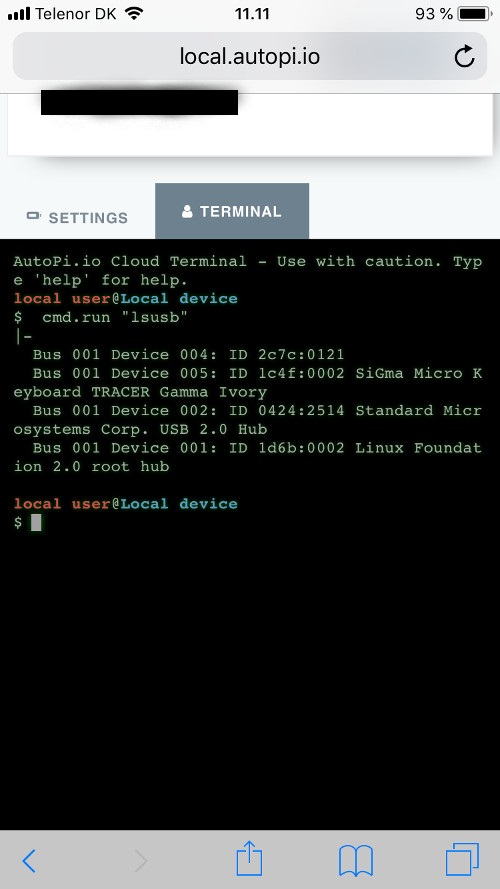
Open the terminal and run:
cmd.run "lsusb" -
The output of the command should be similar to this:
-
The important part to look for is the Modem. The ID will be different depending on which modem your device is equipped with:
Modem Manufacturer USB ID Quectel 2c7c:0121Telit 1bc7:1031 -
If you ordered a 4G edition and you don't find the modem in your list, then please contact support@autopi.io.
Check Modem Setup
Check PDP Context
PDP context controls how the modem connects to the mobile network. Incorrect values can prevent data sessions from starting.
For software version 1.22.7 or newer:
modem.connection pdp_context
For older versions:
modem.connection execute AT+CGDCONT?
Expected output is either:
**data: '+CGDCONT: 1, "IPV4V6","",0,0,0,0'**
or
**Data:**
**- '+CGDCONT:1,"IPV4V6","",0,0,0,0'**
**- '+CGDCONT:2,"IPV4V6","ims","",0,0,0,0'**
If the dual-context result causes connectivity issues, reconfigure with:
cmd.run "systemctl stop qmi-manager"
modem.connection execute AT+CGDCONT=2
cmd.run "systemctl restart qmi-manager"
Run the PDP command again to confirm the result.
Check Firmware Switch
An incorrect firmware switch setting can prevent the modem from connecting to the network correctly.
For software version 1.22.7 or newer:
modem.connection active_firmware_image
this should return a message that looks like this.
**_stamp: "the curent date"**
**_type: active_firmware_image**
**net_conf:global**
**storage_conf: ram**
Here we are looking to see if the net_conf is set to global.
For older versions:
modem.connection execute AT#FWSWITCH?
Expected output:
FWSWITCH:40:1
If the value does not start with 40, configure it manually:
modem.connection execute AT#FWSWITCH=40,1
Restart the device and verify again.
For additional modem commands and examples, see Core Commands - Modem.
Check APN Configuration
A missing or incorrect APN can block internet access even when the modem is detected.
If you are using the AutoPi SIM card (included with monthly cloud subscription), APN is pre-configured on newly shipped devices. In most cases, you can skip this section. If you want to verify manually, APN should be set to nxt20.net.
Check the current APN:
modem.connection pdp_context
If APN is missing and your carrier requires it, set it manually:
modem.connection execute AT+CGDCONT=1,"IPV4V6","<your-apn>"
Then restart the manager:
cmd.run "systemctl restart qmi-manager"
If you do not know your APN, check your carrier documentation or support channel.
Check qmi-manager Status
qmi-manager maintains the cellular data connection.
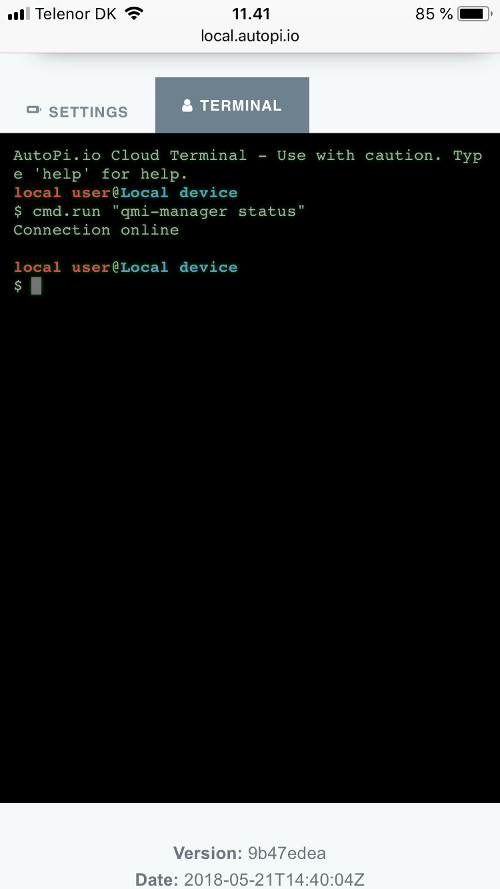
Check status:
cmd.run "qmi-manager status"
Expected output:
If needed, restart it:
cmd.run "systemctl restart qmi-manager"
Restart the Network Interface
If qmi-manager is running but internet is still unavailable, cycle the interface:
cmd.run "qmi-manager down"
cmd.run "qmi-manager up"
If SIM detection fails on up, power down the device, check SIM orientation and seating, then try again.
Check interface state and IP address:
cmd.run "ip link show wwan0"
cmd.run "ip addr show wwan0"
If wwan0 has no IP address, the mobile session is not established.
Adjust the MTU Setting
If connection is unstable (drops, intermittent cloud status), tune MTU. Based on your board version, the default MTU is either 1500 or 1280.
If your default is 1280, change it to 1500 and check whether the device comes online.
If your default is 1500, change it to 1280 and check whether behavior improves.
This quick comparison helps confirm whether MTU is causing the issue.
Apply MTU:
grains.set qmi:mtu <value>
state.sls network.wwan.qmi.config
Verify:
grains.get qmi:mtu
cmd.run "cat /etc/udhcpc/qmi.override"
Confirm that both outputs match the configured MTU.
- US Verizon: start with MTU
1428. - Other carriers: start with MTU
1280.
Check Internet and Cloud Connectivity
Test internet over cellular:
cmd.run "ping -c 5 -I wwan0 google.com"
Test AutoPi Cloud access:
cmd.run "curl -v my.autopi.io"
If ping works but cloud access fails, test DNS:
cmd.run "nslookup my.autopi.io"
If DNS fails, try a temporary public DNS value:
cmd.run "echo 'nameserver 8.8.8.8' > /etc/resolv.conf"
Then re-run ping and curl.
Collect Logs for Support
If the issue persists, collect logs before opening a support request. Follow this guide to export relevant logs: AutoPi Logs Guide
Summary
By this point, you should have verified:
- SIM compatibility, orientation, and slot condition.
- Modem detection and modem configuration (PDP and firmware switch).
- APN settings.
qmi-managerandwwan0status.- MTU tuning and DNS/cloud connectivity tests.
If you open a support case, include the full output from all commands used in this guide, along with the collected Logs.
 Shop AutoPi devices
 Compare devices
 Contact sales
 Contact support